Writing Code Is the Easy Part: Why Good Specification Is Your Product's Insurance Policy
As a software spec writer and project manager who has seen hundreds of ideas turn into products (and a few that stayed on the cutting-room floor), I meet a lot of entrepreneurs and managers who arrive with "fire in their eyes". They know exactly what they want: "It'll be like Uber, but for dentists," or "an inventory-management system with an AI that can predict the future."
The initial instinct is completely understandable: "Come on, let's start developing, why waste time?" It's a healthy passion — but experience teaches that it's precisely the methodical pause before the code that protects the budget and the product vision.
Before you write a single line of code, you have to stop and do a specification. This isn't just a bureaucratic document; it's the translator between the business dream and the technological reality. And today I want to explain why this stage is the most critical one in your project, and how it can save you tens of thousands of dollars.
The psychological trap: the blind spot of the first idea
Entrepreneurs and developers are solution-driven people, and that's a great trait. The problem arises when the mind "falls in love" with the first solution it found, or borrows an existing idea from the market, and invests all its energy in proving why that idea is the right one — instead of examining alternatives.
This is a well-known psychological phenomenon, often called anchoring bias. Once an idea, a requirement, or an initial budget is presented, it becomes an "anchor" that influences every decision that follows — even when new information shows it isn't optimal. Instead of continuing to search for the best solution, there's a tendency to settle for a "good enough" one, which can lead to a mediocre or overly expensive product.
The specification is the professional tool that forces us to run a fresh thinking process, to ask questions like "Is this really the problem we need to solve?" and "Is there a simpler, cheaper, or more efficient way?" It forces the team to "release the anchor" and re-examine the options.
So what actually is a "specification"? (It's much more than UI screens)
Many people confuse specification with design. They think that if they have a sketch of what the screen looks like, they have a specification. Wrong.
A professional software specification is a process of decomposition and reassembly:
- Defining the essence: Who are the users (User personas)? What's their pain? What's the solution?
- The logic (user flow): What happens when the user presses the button? What happens if there's no internet? What happens if they enter the wrong password five times? (These are "edge cases," and they're the ones that bring systems down).
- The technology: Are we building an app or a website? Which database fits? Do we need off-the-shelf components or development from scratch?
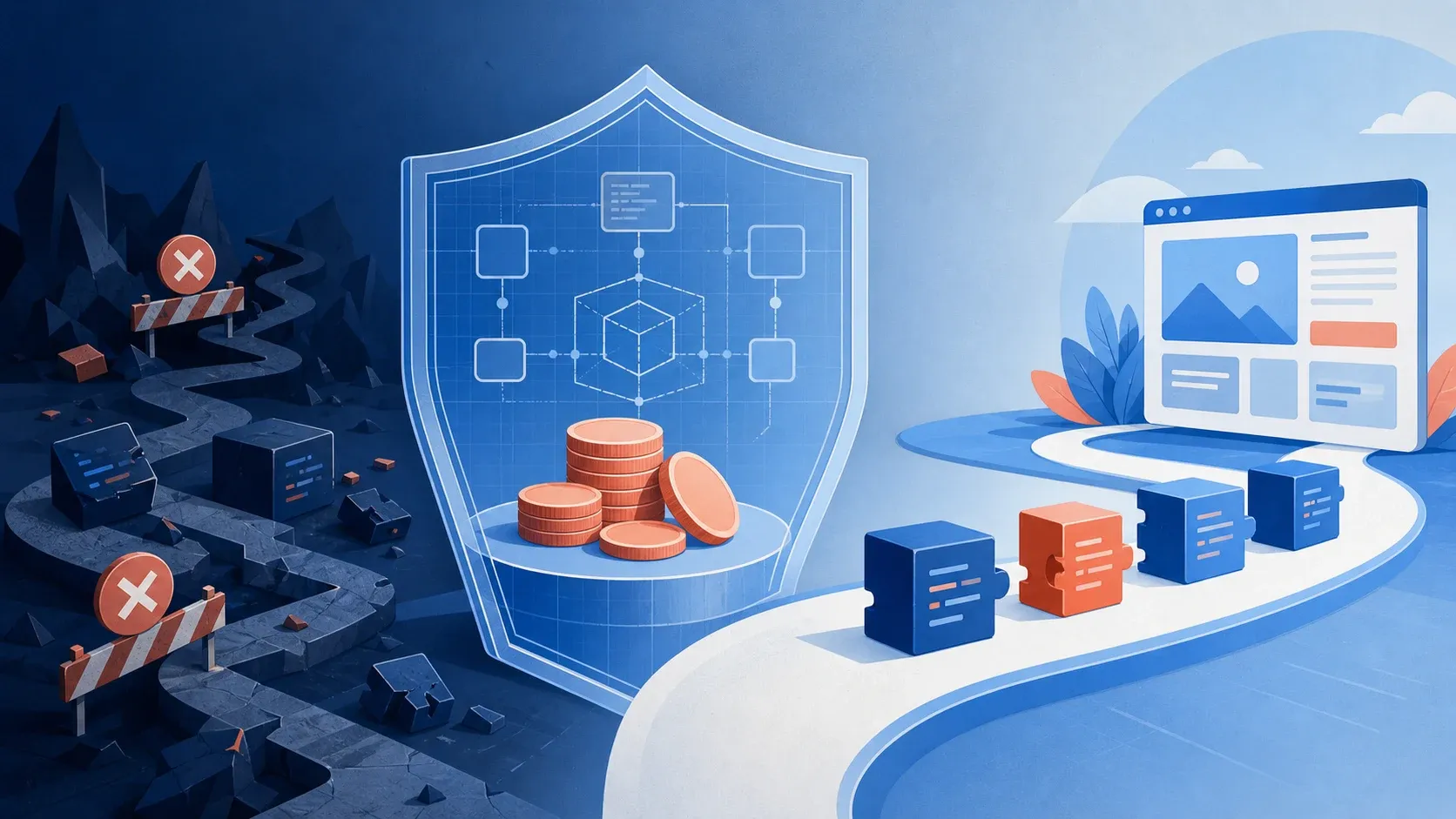
The specification is the map. Going into development without one is like setting off on a desert trek with no map and no compass. You might reach your destination, but you'll probably get lost along the way and burn through all your water (the budget).
The expensive trap: "I need it because everyone has it"
The most important part of my job as a senior spec writer isn't writing documents — it's asking hard questions. The client will always ask for the maximum. My job is to distill the essential minimum that delivers maximum value (what we call an MVP).
The story of the chat that never was
A client came to me wanting to build a service app for field technicians. One of his central requirements was: "I must have a real-time chat system inside the app." He wanted technicians to be able to message the call center in real time — including typing indicators, message history, image sending, and instant notifications.
From a development standpoint, quality real-time chat is an expensive and complex component. It requires WebSocket servers, load management, complex security, and heavy storage. The time estimate for that component alone was about a month of work for two developers. A very high cost.
Instead of saying "no problem" and starting to write the requirement, I stopped and asked: "Tell me, when the call-center manager gets a message from a technician, how long does it take them to reply on average?"
The client thought for a moment and answered: "Look, the call center is busy. It usually takes them between one and four hours to reply. Sometimes only the next day."
I smiled and told him: "In that case, you don't need chat. You don't even want chat." I explained that a chat interface creates a psychological expectation of an immediate reply (like WhatsApp). If the technician writes a message in the chat and gets a reply after four hours, they'll be frustrated and think the app is bad.
The solution: instead of chat, we specified a "ticket system." The technician submits a ticket and gets an acknowledgment — "Your request has been received, we'll get back to you within four hours." It's far simpler to build (a simple form sent to the server), 80% cheaper to develop, and — most importantly — it fits the business reality.
The result: the client saved tens of thousands of dollars on unnecessary development, and the users got an experience matched to their expectations. That's the power of good specification.
Why you should invest in specification now
There's an old rule of thumb in software:
- Fixing a bug at the specification stage costs one dollar (you delete a line in a document).
- Fixing it during development costs 200 dollars (the developer has to rewrite code).
- Fixing it after the product is live costs thousands of dollars (data migrations, reputational damage, version updates).
The specification process forces you to "build the product in your head" and on paper before you've burned a single dollar on developers. It helps you understand what really matters, and what can be dropped.
The bottom line: don't rush to write code. Take an expert, sit down, ask the hard questions, sharpen the challenge, and produce a precise work plan. A product built on the foundations of a strong specification will go live faster, cost less, and give your users exactly what they need.
Need help specifying a product or turning a business idea into software? Reach out.