Making 1,000 Brain-Research Experiments Accessible With Open Science
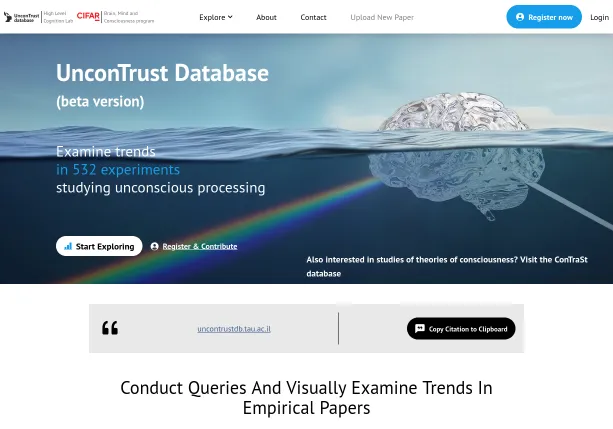
How do you make 1,000 brain-research experiments accessible to a broad audience in a way that's simple and beautiful?
In this special project with Professor Liad Mudrik's lab at Tel Aviv University — a hub for high-level cognition and consciousness research — the goal was ambitious: open science. The lab wanted to break down the walls and give researchers and the public access to their vast database.
The challenge was to take mountains of complex data and make it accessible. Here's how we approached it.
Bridging the gap through communication
To build a tool that serves brain researchers, you have to understand how they think. We kept a close, ongoing dialogue with the lab team to sharpen the challenge: what are researchers looking for, and how do you visualize something like "consciousness" clearly?
Immediate value through an MVP
Instead of building a heavy, cumbersome system, we built two open-source applications focused on the essentials: fast search, smart filtering, and clear visualization. The goal was a tool that works quickly and delivers research value immediately.
The result is ContrastDB and UnconTrustDB — tools that help people better understand how
our brains work, letting users search, filter, and visualize complex experiments effortlessly.
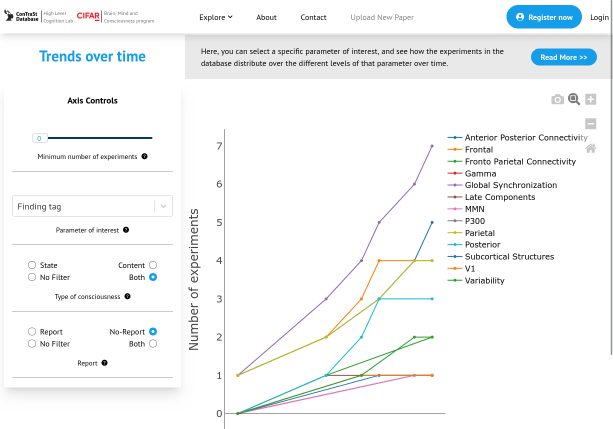
Proud to support the scientific community in Israel and to help make knowledge free and accessible. If you're turning complex data into an accessible product, reach out.